
Robert Guest has been making swords for more than a decade, but his goal has always been to understand katana at their source. A U.S. military veteran and former business manager, he turned to blacksmithing after returning from deployment in Afghanistan, eventually building the skills and relationships that brought him to Japan to train in traditional Japanese swordmaking.
Today, Robert is apprenticing under swordsmith Masahiro Yoshida in Gifu, working toward the certification required to make Japanese swords professionally in Japan. In this interview, he reflects on humility, apprenticeship, regulation, the cultural meaning of katana, and his responsibility to carry the craft forward.
What is a katana-kaji?
A katana-kaji is a Japanese swordsmith trained in the traditional methods used to forge Japanese swords. In modern Japan, swordsmiths must complete years of supervised training and receive a license to produce art swords (美術刀剣製作認可) from the Agency for Cultural Affairs before they can independently produce registered Japanese swords. This is a required certification; you cannot legally forge a Japanese sword in Japan without it.

From Military Service to Japanese Swordsmithing
Before coming here, what was your life like back in the U.S., and what led you from military service to pursuing traditional swordsmithing?
In America, I was a business manager. I helped both military bases and Amazon handle money and day to day finances and business operations. However, my desire to blacksmith began more than 10 years ago when I came home from my deployment overseas to Afghanistan. I was recommended by my therapist to pursue a hobby I found rewarding and required working with my hands- and after trying a few out I ended up on blacksmithing. Along with my love of history and my love of katana and Japanese culture, I began to pursue Japanese blacksmithing.
What First Inspired a Lifelong Interest in Katana?
What first drew you to the world of katana craftsmanship? Was there a moment or experience that sparked that passion?
I have always been involved in katana in some way. I took martial arts where the katana was used since I was a little kid- I can't remember a time when I wasn't in love with the shape and style and artistry of katana.
Finding a Swordsmithing Apprenticeship in Japan
How did you go about finding or being accepted into an apprenticeship in Japan, something considered difficult to obtain, especially for non-Japanese individuals?
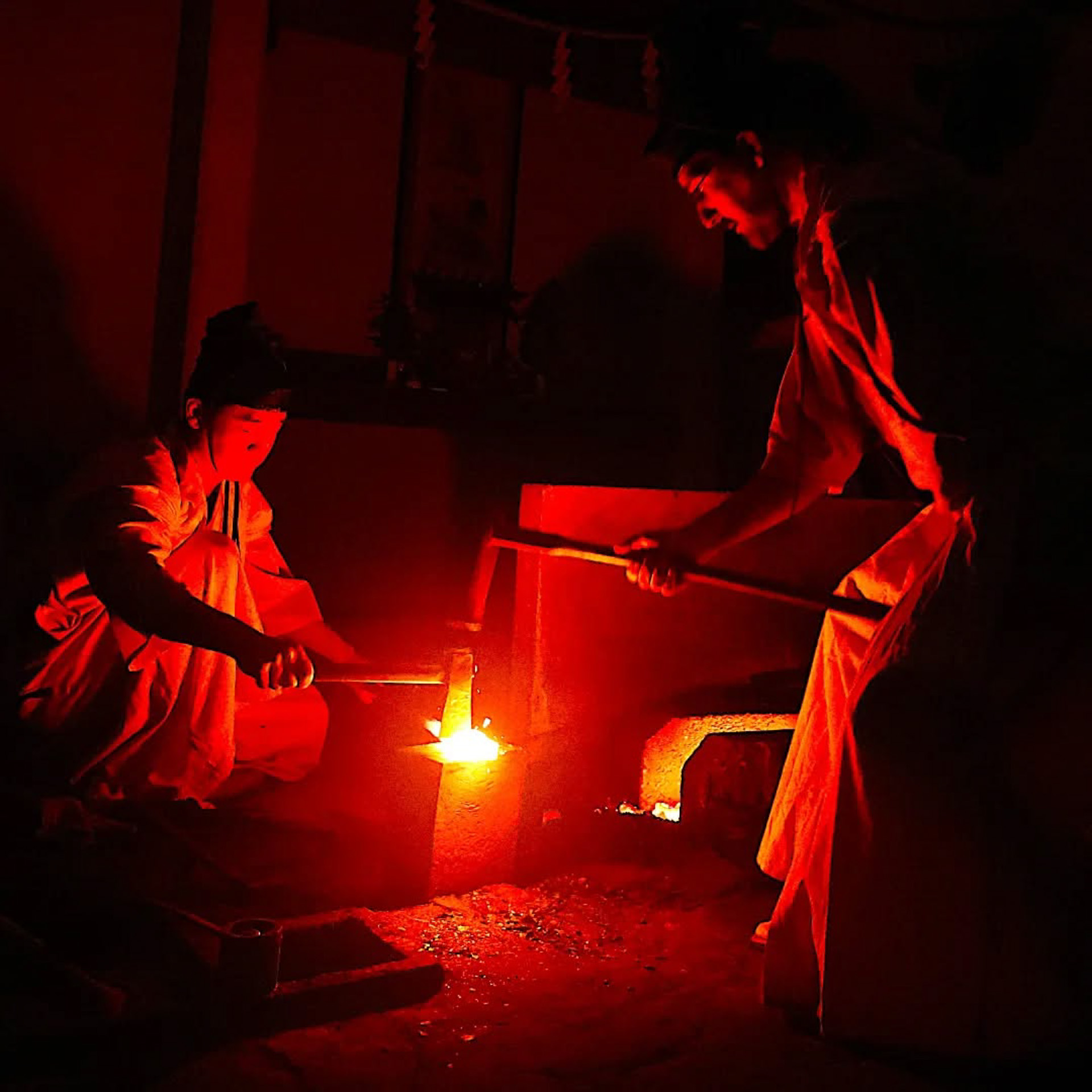
There were three master smith whose work I really respected. However, of those three- only one developed a relationship with me. He was the late Yoshida Ken, my master's father. I admired his work, and we shared emails and phone calls where I expressed interest in learning the traditional craft, and eventually was invited to become his apprentice. However, I had not met his son (my current master) until I arrived in Japan. After Ken passed away, his son took over my instruction.
Learning Humility as an Apprentice
What have been the biggest challenges, cultural, physical, or emotional, that you’ve had to navigate during your training?
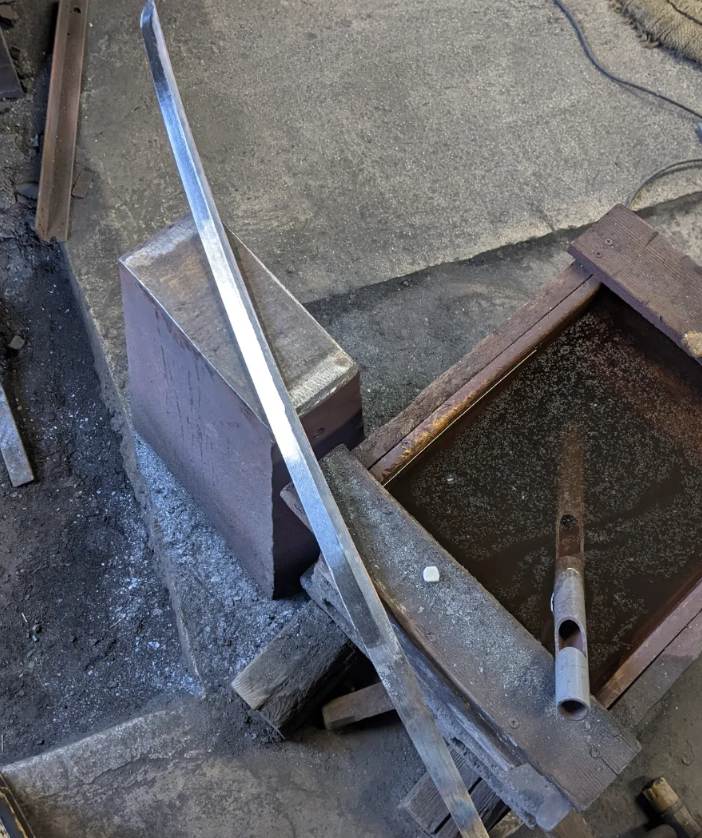
The biggest challenge for me is humility. Going from a role of teaching classes, leading blacksmith organizations and selling my work professionally to a role of subservience- being the lowest rank in the shop- is a challenge. I wanted to push back, to tell my master that he didn't need to teach me how to make tools, I've been making them for a decade. But, because I was in the Army, you nod, agree and do the work. I still sometimes struggle when someone assumes I don't know something, or when I get told how to do something when I consider another way is better, but it is much easier than it was years ago.

Want to learn a traditional craft at home? Discover Online courses for Japanese traditional crafts!
How Regulation Shapes Japanese Swordmaking
Sword-making in Japan is an ancient and highly regulated tradition. What are your thoughts on its future, and what challenges do you see ahead for katana-kaji in Japan?
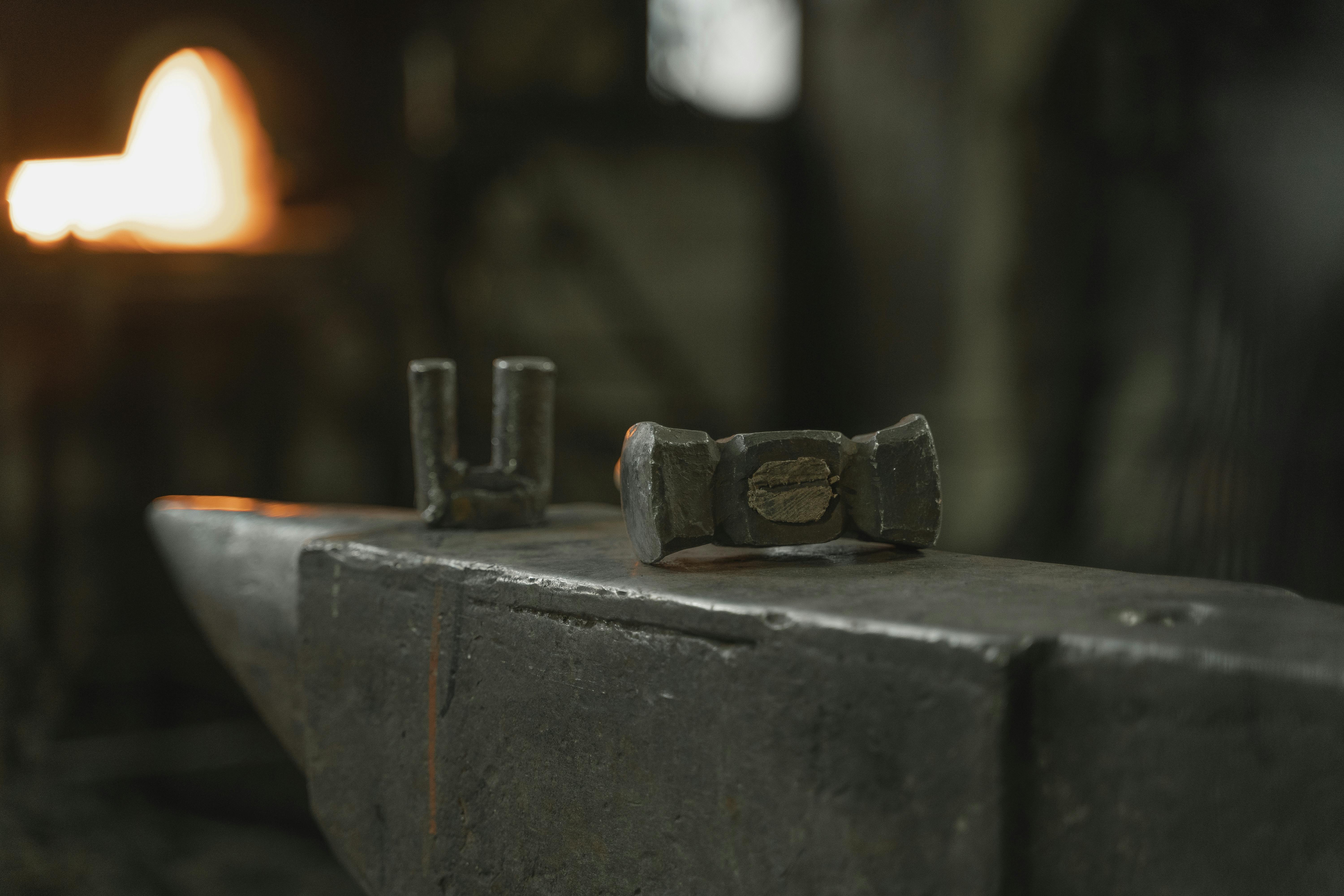
One of the biggest challenges but also greatest opportunities is the regulation itself. Katana-kaji must conform to strict production limits, material uses and style and design choices. However, pushing the boundaries of those limitations is often what leads to amazing pieces of unique art.
Understanding the Cultural Meaning of Katana
Are there aspects of the craft or philosophy that you think could be better understood or appreciated by people outside Japan?
This is a tough one. Most American's first exposure to swords were movies like Kill Bill, Last Samurai or anime like Demon Slayer. In their mind, the sword holds a certain position, when in reality- the Japanese mindset is very different. Kill Bill is fun, but it does very little to accurately display the significance that katana plays culturally within Japan and its history. I think in this regard, a foreigner's perspective of "How can I bend the rules and make something unique and beautiful, while still being a katana?" is the only thing we can bring to the table.

What It Takes to Learn a Traditional Craft in Japan
What advice would you give to others, foreign or Japanese, who dream of learning a traditional craft in Japan?
It's hard. It will always be hard. Expect that. Traditional crafts should not be taken on a whim. You aren't the main character. You are a link in a chain that is 2,000 years old. Your duty, your responsibility, is to make your link as strong and enduring as possible, so those that might come after you can look to you as an example of what was right. Seek not to copy the old masters. Seek to understand what it is they understood.

Carrying Japanese Swordmaking into the Future
Finally, what’s next for you, both in your training and in how you hope to share your journey with others?
Next year when I am licensed, I want to bring this culture to the rest of the world. I think that katana are hidden gems that should be uplifted and appreciated for their beauty. What were once weapons to kill are now regarded as pieces of art that bring people together. I want to share that philosophy with anyone that will listen.
You can follow Robert on his Instagram, or even schedule a metalworking experience with him in Gifu, Japan.
Want to discuss this article? Check out the "Japan Handmade Forum" on Discord to join the conversation!
Know someone we should interview next? Send us a recommendation at hello@bottlecap.jp
This page may contain affiliate links, and Bottlecap may earn a commission at no extra cost to you.